India’s transition toward a circular economy is accelerating—but beneath this ambition lies a complex and often overlooked reality. The recycling ecosystem, particularly for End-of-Life Vehicles (ELVs), is still heavily dependent on informal systems that operate outside regulatory oversight.
While policies and frameworks are evolving, the gap between intent and execution remains significant.
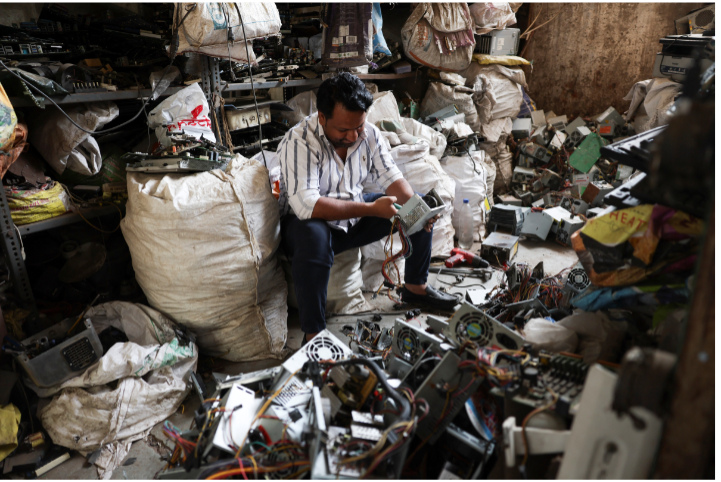
Informal recycling refers to unorganized, small-scale operations where waste materials—including vehicles—are dismantled and processed manually, often without safety, environmental, or compliance standards.
This sector plays a paradoxical role:
- It provides livelihoods to thousands
- Yet operates with minimal regulation and technological support
In India, a significant portion of recycling activity—across waste streams—is still handled informally, limiting traceability, efficiency, and sustainability outcomes.
What Are Key Risks and Challenges of Informal Recycling?
1. Environmental Hazards
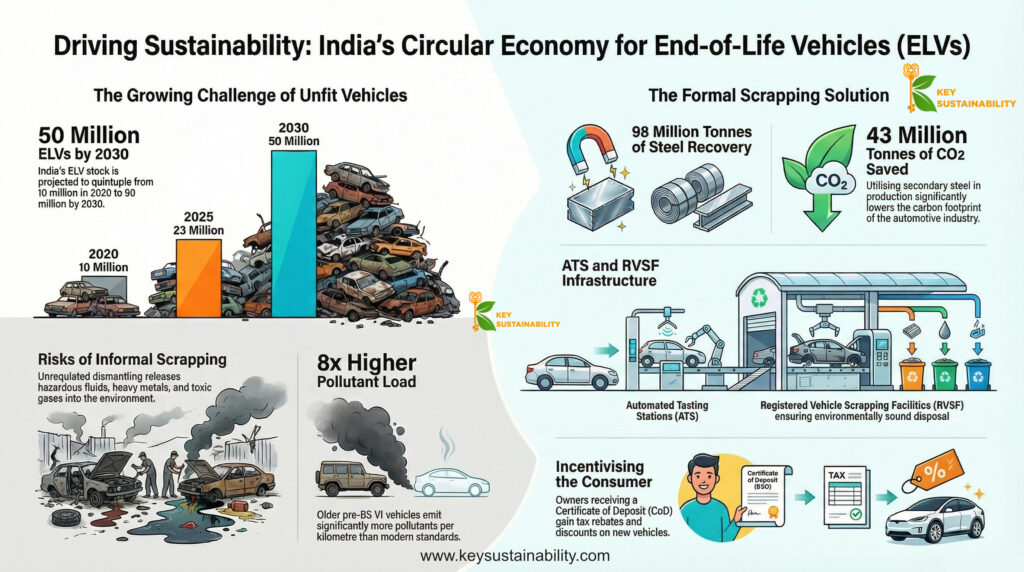
- Unscientific dismantling leads to leakage of oils, coolants, and hazardous fluids
- Open burning and acid treatment release toxic emissions
- Soil and water contamination becomes widespread
Unregulated ELV dismantling directly contributes to pollution and loss of recoverable materials.
2. Occupational Health & Safety Risks
- Workers operate without PPE or training
- Exposure to toxic substances (lead, mercury, chemicals)
- High incidence of respiratory and skin diseases
Informal workers often lack awareness and operate under unsafe conditions.
3. Loss of Material Value
- Only high-value components (engines, metals) are recovered
- Advanced materials and plastics are often wasted
India’s ELV recycling remains limited to basic component recovery, with significant value lost due to lack of technology.
4. Lack of Standardization & Compliance
- No uniform dismantling processes
- Absence of documentation and traceability
- No adherence to environmental norms
This leads to inefficient resource utilization and limits integration into global supply chains.
5. Social & Economic Concerns
- Workers remain outside formal labor protection systems
- Income instability and exploitation risks
- Limited skill development opportunities
Despite being a major employment generator, the informal sector remains socially vulnerable.
India has taken strong regulatory steps toward ELV management, particularly through:
- Vehicle Scrappage Policy
- Registered Vehicle Scrapping Facilities (RVSFs)
- Automated Testing Stations (ATS)
- Incentives for voluntary scrapping
The vision is clear: build a formal, traceable, and environmentally sound recycling ecosystem.
What Is The Current Status of ELV Implementation in India?
1. Growing ELV Volumes
- ELVs expected to rise from ~23 million (2025) to ~50 million by 2030
- Increasing pressure on recycling infrastructure
2. Infrastructure Development – But Not Enough
- Over 150 Automated Testing Stations operational
- RVSFs are being set up across states
However:
- Capacity is still insufficient for projected volumes
- Regional imbalance exists in infrastructure deployment
3. Dominance of Informal Sector Continues
- Informal dismantlers still control a large share of ELV processing
- Low awareness among vehicle owners about formal scrapping channels
- Weak enforcement of compliance
This continues to divert ELVs away from formal facilities.
4. Economic & Behavioral Barriers
- Informal sector often offers better immediate cash value
- Lack of strong incentives for owners to scrap through formal systems
- Logistics and accessibility challenges
5. Data & Traceability Gaps
- Limited tracking of vehicles from deregistration to recycling
- Weak monitoring of recovery rates and material flows
This affects policy effectiveness and ESG reporting.
What Are The Core Challenges in ELV Ecosystem Transition?
| Challenge Area | Reality in India |
| Policy vs Implementation | Strong policies, weak enforcement |
| Infrastructure | Growing but inadequate |
| Informal Sector | Dominant and deeply entrenched |
| Technology | Limited advanced recycling capabilities |
| Awareness | Low among vehicle owners |
| Economics | Informal sector more attractive |
The Way Forward: Bridging Informal and Formal Systems
India’s success in ELV circularity will depend on integration—not elimination—of the informal sector.
Key Strategic Actions
1. Formalization of Informal Sector
- Training and certification programs
- Inclusion into authorized dismantling networks
2. Digital Traceability Systems
- End-to-end ELV tracking (registration → scrapping → recycling)
- Integration with ESG and compliance platforms
3. Stronger Incentives
- Financial benefits for vehicle owners
- EPR-driven accountability for OEMs
4. Infrastructure Acceleration
- Expansion of RVSFs and ATS across all regions
- Public-private partnerships
5. Awareness & Behavioral Shift
- Campaigns for responsible vehicle disposal
- Industry collaboration
Conclusion: A Critical Turning Point:
India stands at a pivotal moment in its circular economy journey.
The ELV ecosystem is evolving—but not yet mature. Informal recycling, while economically significant, poses serious environmental and systemic risks. The real opportunity lies in transforming this fragmented ecosystem into a digitally enabled, compliant, and inclusive circular model.
The question is no longer whether India can build a circular ELV ecosystem—
but how fast it can transition from scrapyard reality to sustainable recovery systems.